Amphora, geraniums, and more fruit
Dear Sarah - Day 278 of our daily drawing exchange


Hi Sarah-
As I was unable to get a last minute, early morning ticket to the Acropolis, I checked to see what was close to our apartment in Athens. Wound up at the peaceful, tourist-free (literally - I saw ONE other person there with a camera) park at the location of Plato’s Academy where it’s still possible to stroll among the shaded ruins where Plato held court and thought big thoughts.
There’s a tiny museum (free) inside what looks to be a few shipping containers glued together, which I visited while waiting for F. to make his way to the nearby train station.
It was such a strange experience to be in this place steeped in history, so central to the development of western thought and philosophy and to be sitting on the remains of buildings where Plato debated, strolled, and contemplated life - basically alone. I tried to do the same but though I strolled (and sketched a bit), did not exactly come up with anything too profound.
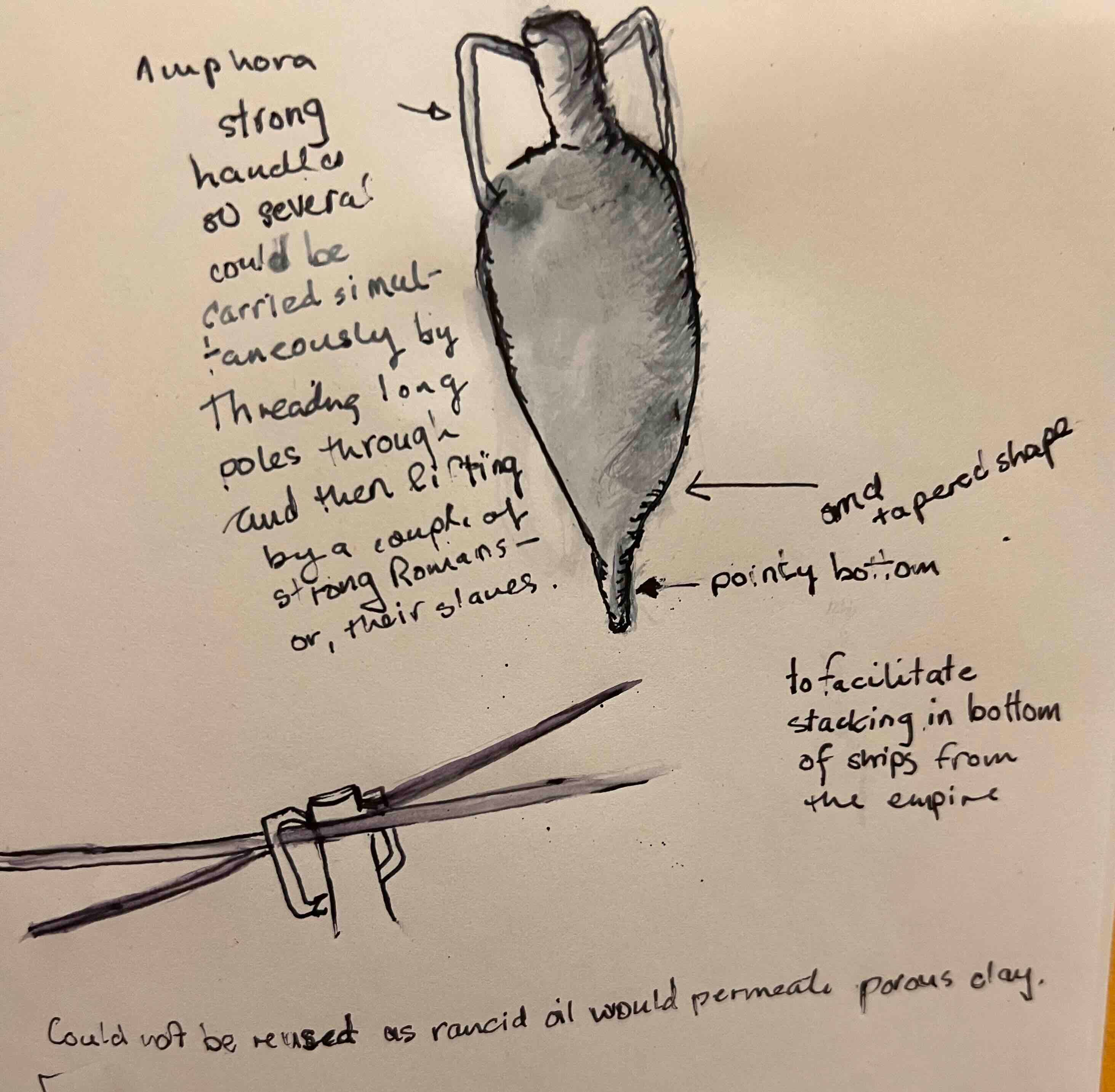
After that, wandered over to the train station to wait for F., had a coffee, and thought about amphora design (and sketched an amphora). In Rome, we visited a site where for several hundred years (between about the first to the third century AD), broken amphorae (? is that the plural?) were neatly stacked into what became Monte Testaccio, a literal mountain of pottery shards. Because the clay vessels could not be reused (rancid oil would seep into the walls of the vessels), they were broken into pieces and piled up and up and up. The hill is a kilometre in circumference at the base and 54 meters high at the summit. Wine cellars were dug into it at ground level at some point, and shops and bars used the base of the mountain as back walls. While we were standing there, marvelling at the precision with which the massive pile was constructed, we also learned a thing or two about amphora design. The tapered pointed bottoms were obviously not good for standing them up anywhere, but were ideal for when they needed to follow the curve of the inside of a ship’s hull. The walls were thick to withstand the travel, and the two sturdy handles at the top were designed to allow several to be carried at one time by suspending them from poles. I suspect the slaves who had to unload the ships in the broiling sun weren’t overly impressed, but the system would have been reasonably efficient.
Forgive the blotchy writing - my fountain pen was acting up and I didn’t have ready access to water to lubricate the nib and get things flowing again.
Nikki
Hi Nikki,
I think the blotchy writing/drawing sort of suits the subject matter. A more precise line wouldn’t have conveyed the history and antiquity of the object. I think you are doing yourself a disservice re: profound thoughts at Plato’s Academy. Your engagement with your surroundings (and their history) has always struck me as pretty, well, deep.
I hope you and F found each other at the train station (how romantic—you should write a romcom!) and are even now sleeping well so that you can enjoy tomorrow.
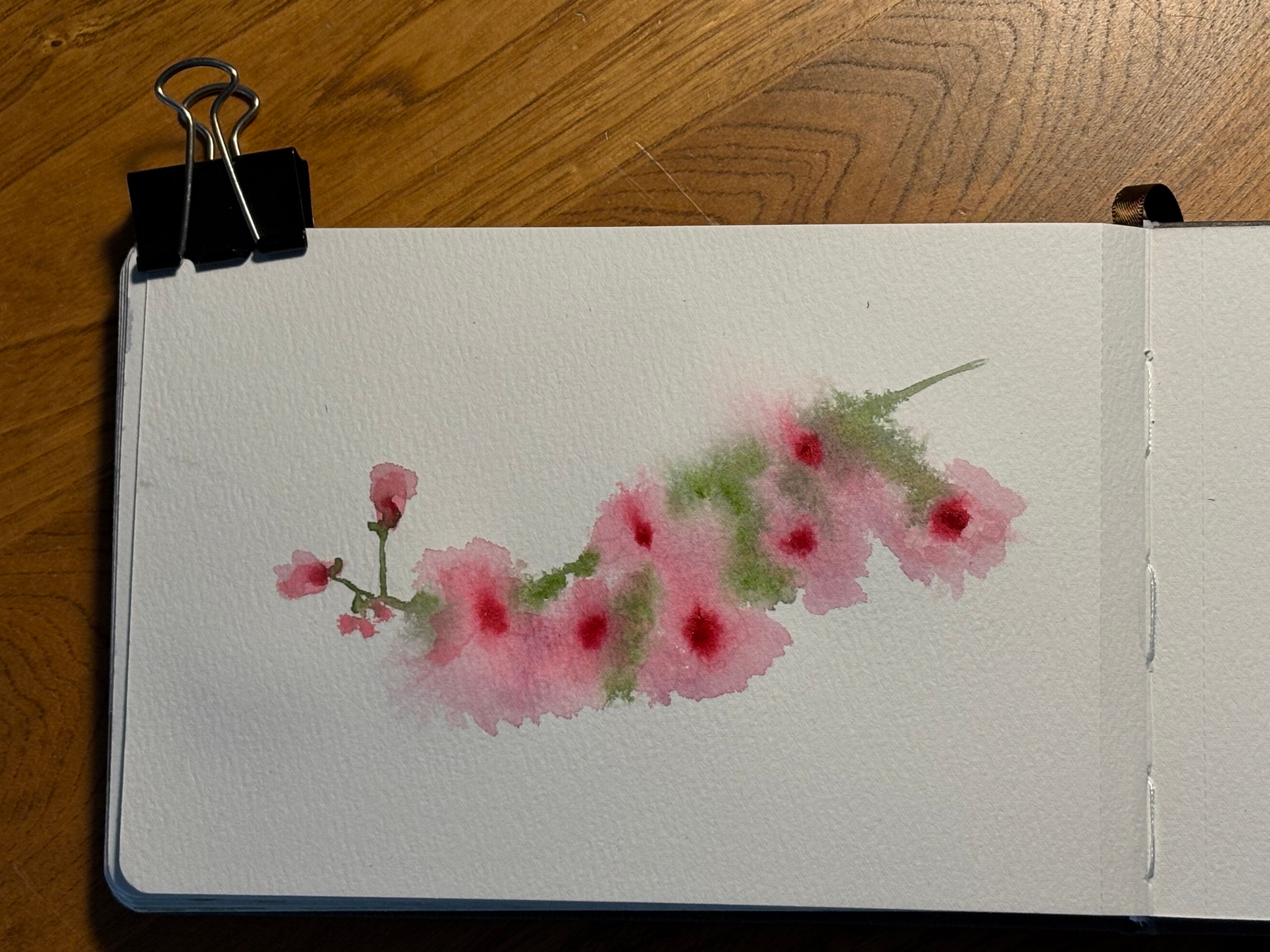
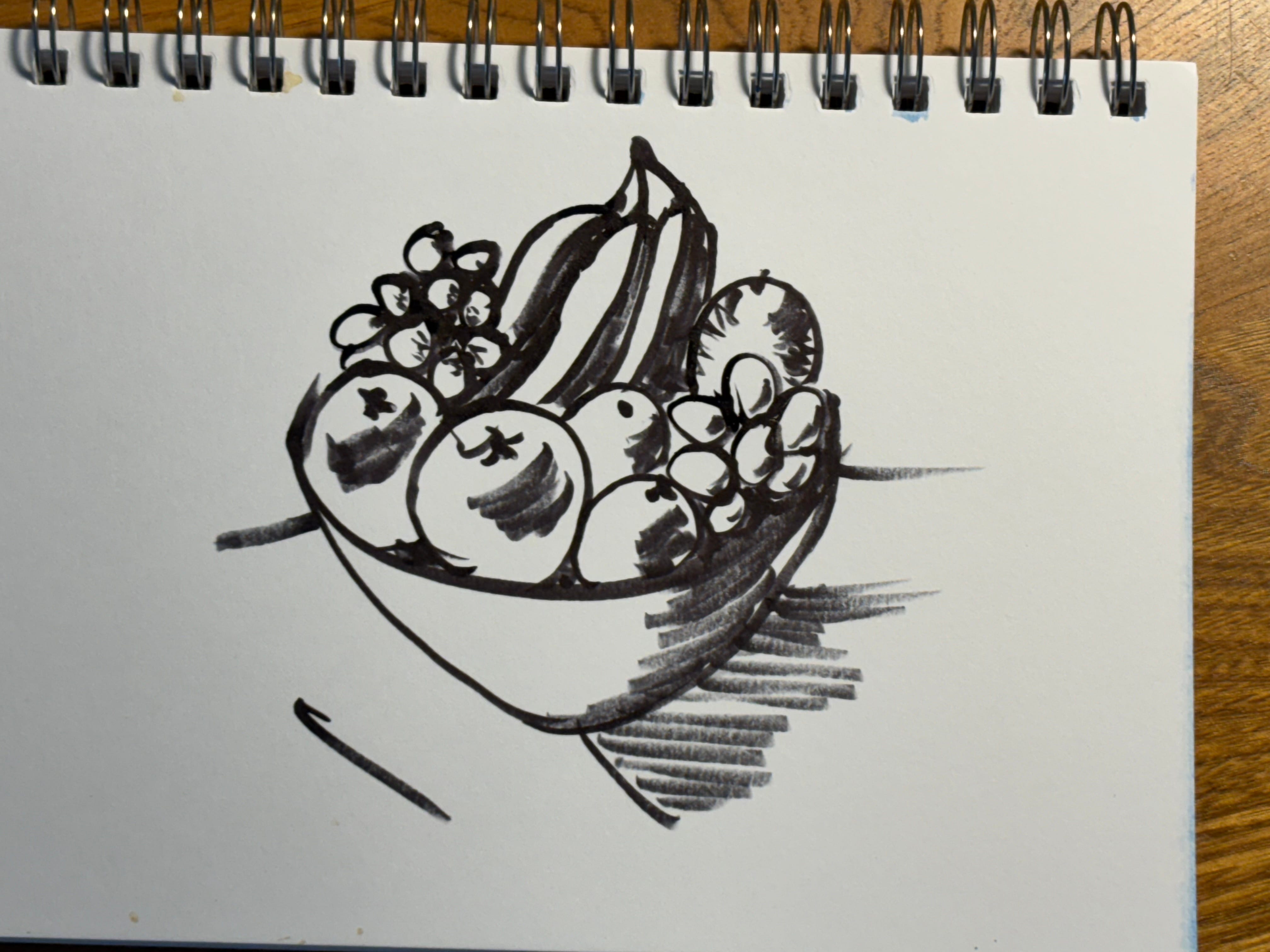
Today I drew the fruit bowl using a black brush pen. I really love the effect, although my pen (which belonged to my mother who has been dead for 25 years) is finally running out of ink. Then I did a moody painting of the last of the ivy geraniums on my deck. Very different effect!
My soup is cool enough to eat now, so off I go.
XO S